Dispensary Scheduling: How to Build Your Staff Schedule Before Opening Day
.png)

You have signed the lease, cleared your final inspection, and hired your first budtenders. Now comes a question that catches a lot of first-time owners off guard: who works when? A dispensary schedule is not just a grid of names and shifts. It is the system that decides whether your opening weeks feel controlled or improvised, whether your labor cost stays in line with sales, and whether your team trusts you enough to stick around.
Getting scheduling right before day one is one of the highest-leverage moves a pre-launch owner can make. It is far easier to open with a clear system than to retrofit one while you are also learning your POS, training staff, and meeting compliance deadlines. This guide walks through what dispensary scheduling actually involves, how to build your first schedule step by step, and the practices that keep it working once the doors are open.
What Is Dispensary Scheduling?
Dispensary scheduling is the process of assigning staff to shifts based on projected demand, labor budget, employee availability, and compliance requirements. For a cannabis retailer, it covers budtenders, inventory and receiving staff, security or greeters, and shift leads or managers, coordinated so the store is properly covered during every hour it is open.
What makes it distinct from generic retail scheduling is the regulatory layer. Many states require budtenders and other dispensary staff to hold a valid cannabis worker permit or agent card before they can work a shift, so your schedule has to track credential status alongside availability. Scheduling in cannabis is where workforce planning and compliance meet.
Why Scheduling Deserves Attention Before You Open
Labor is one of the largest controllable costs in retail, and dispensaries are no exception. A common benchmark for service-heavy retail is keeping labor at roughly 20 to 35 percent of sales, and your schedule is the primary lever you use to stay inside that range. Overstaff a slow Tuesday and your margin erodes; understaff a busy Friday and you lose sales and burn out the team you just hired.
Turnover raises the stakes further. Replacing an hourly employee can cost anywhere from a large fraction of their annual pay up to double it once you account for recruiting, onboarding, and lost productivity. Predictable, fair scheduling is one of the cheapest retention tools you have, and it costs nothing but planning to put in place before you open.
How to Build Your First Dispensary Schedule
Here is a practical sequence for building a schedule from scratch in the weeks before launch.
1. Map Your Hours and Coverage Needs
Start with your licensed operating hours and work backward. For each hour you are open, decide how many people you need on the floor and in which roles. Build in time before opening for cash handling and inventory counts and time after closing for reconciliation and cleaning. Your first draft does not need to be perfect, but it should account for every hour a staff member needs to be in the building, not just the hours customers are present.
2. Confirm Credentials and Availability
Before you assign a single shift, collect two things from every employee: proof of a valid cannabis worker permit where your state requires one, and their availability. A schedule built on staff who cannot legally work a shift is a compliance problem waiting to surface. Track permit expiration dates now so a lapse never quietly puts an unpermitted worker on the floor.
3. Set a Labor Budget for Opening Weeks
Decide what you can afford to spend on labor before sales data exists to guide you. Because you will not have historical traffic to forecast against, build a conservative estimate tied to your projected daily sales and your target labor-to-sales ratio. Plan to revisit it weekly once real numbers start coming in.
4. Assign Shifts Around Your Anchors
Every schedule needs anchors: the shift leads and experienced staff who open, close, and hold the floor during peak hours. Place them first, then fill in supporting budtenders and greeters around them. Make sure every shift has someone authorized to handle cash, resolve a compliance question, and manage the POS.
5. Publish Early and Build in a Feedback Loop
Publish the first schedule well before it takes effect so staff can flag conflicts before they become no-shows. Giving employees advance notice is not just courtesy; a growing number of cities, along with the state of Oregon, now have predictive scheduling, or "fair workweek," laws that require advance notice of schedules, often 14 days, and penalty pay for last-minute changes. Building an early-publish habit keeps you compliant where those rules apply and builds trust everywhere else.
Best Practices That Keep Your Schedule Working
A schedule is a living document. These habits keep it healthy past opening week.
- Pair scheduling with time tracking from day one. A schedule tells you who is supposed to work; time tracking tells you who actually did. Connecting the two lets you catch early clock-ins, missed breaks, and the gap between scheduled and actual labor cost before it distorts your budget.
- Cross-train so you are never one call-out from a gap. When budtenders can also handle receiving or a greeter can cover the register, a single absence does not leave you scrambling. Note secondary skills in each person's profile so you know your real coverage options.
- Watch labor against sales weekly. Once transactions start flowing, compare scheduled labor hours to actual sales each week and adjust. This is how you move from a guessed opening budget to a schedule tuned to your store's real rhythm.
- Give staff a way to swap responsibly. Let employees request swaps and pick up open shifts through a channel you approve, rather than through text threads you never see. It reduces no-shows and gives staff ownership without giving up your control.
- Keep compliance visible in the schedule itself. Permit status, minor-labor rules, and break requirements should live where you build shifts, not in a separate binder you forget to check.
How KayaPush Fits Into Dispensary Scheduling
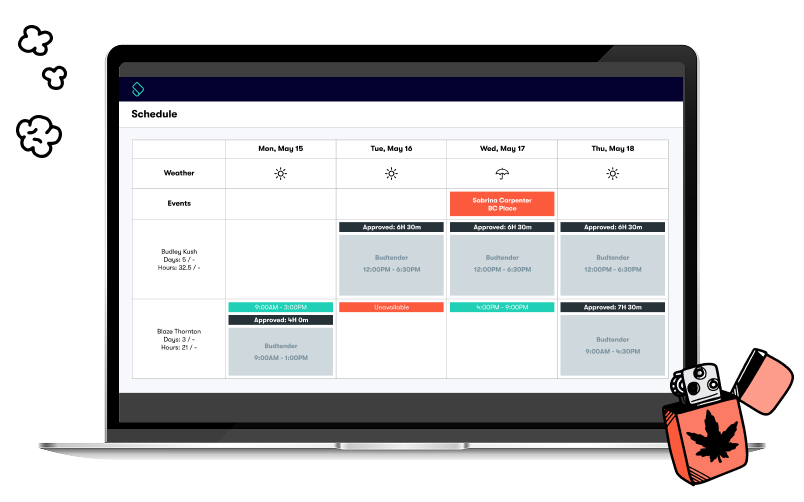
KayaPush was built for cannabis operators, which means scheduling and compliance are designed to work together rather than in separate tools. Scheduling lets you build shifts around roles and coverage, publish schedules in advance, and manage swaps and open shifts in one place. Paired with Time Tracking, you can compare scheduled hours to actual clock-ins, flag early punches and missed breaks, and keep a clean record of hours worked that flows straight into payroll.
Because KayaPush is built for dispensaries, it also connects to the systems you are already setting up, integrating with cannabis POS platforms like Dutchie, Flowhub, Cova, and Treez. That means the labor side of your operation talks to the sales side, so watching labor against sales becomes a report instead of a spreadsheet exercise.
If you are working through the rest of your pre-launch setup, this pairs naturally with building your dispensary tech stack and finalizing your staffing plan before opening day.
Dispensary Scheduling FAQs
When Should a New Dispensary Build Its First Schedule?
Build a draft schedule as soon as you have hired your core team and confirmed operating hours, ideally two to three weeks before opening. That gives staff time to flag conflicts and gives you time to fix coverage gaps before they become opening-day problems.
How Many Staff Does a Dispensary Need Per Shift?
It depends on your square footage, expected traffic, and local rules, but most small dispensaries open with at least one shift lead, one or two budtenders, and a greeter or security presence per shift. Start conservative, track how actual traffic maps to your coverage, and adjust weekly.
Do Dispensary Employees Need a Permit to Be Scheduled?
In many states, yes. Budtenders and other dispensary staff often must hold a valid cannabis worker permit or agent card before working a shift. Confirm your state's requirement and track permit status and expiration dates as part of your scheduling process so no one works without valid credentials.
What Is a Good Labor Cost Percentage for a Dispensary?
A common retail benchmark is keeping labor at roughly 20 to 35 percent of sales. Where you land inside that range depends on your service model and margins. The point is to set a target before you open and use your schedule to hold to it.
Can Scheduling Software Help With Cannabis Compliance?
It can help, to a certain extent. Scheduling built for cannabis lets you track worker permits, break requirements, and advance-notice rules alongside shifts, so compliance is part of how you build the schedule rather than a separate check you might forget.
From License to Launch, One System at a Time
Scheduling is one of the systems that quietly decides how smoothly your first months go. Set it up before opening day and you start with control over labor cost, coverage, and compliance instead of chasing all three at once. Build the framework now, connect it to time tracking, and tune it against real sales as they come in.
Ready to open with scheduling and compliance working together from day one? Give your team the tools to build shifts, track hours, and stay compliant by scheduling a demo with the KayaPush team today.