Croptober Staffing: How to Hire, Onboard, and Schedule for the Harvest Surge
.png)
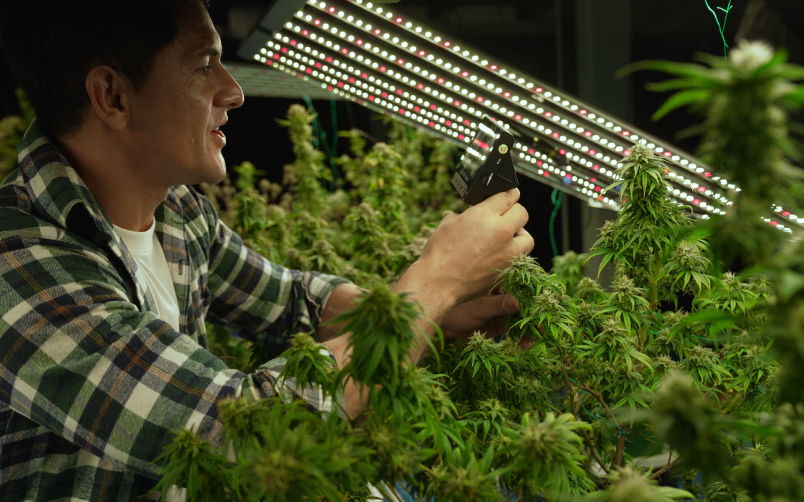
Most labor problems build slowly enough that you can see them coming. Croptober isn't one of them.
A crew that runs the site comfortably in August needs to be two, three, or four times that size by mid-October — and then it needs to be back to normal by November. The demand doesn't ramp. It arrives, holds for a few compressed weeks, and disappears. Miss the window and you're not short-staffed for a season. You're short-staffed for the one stretch of the year that determines what the whole crop is worth.
What Is Croptober?
Croptober is the October outdoor cannabis harvest, when most outdoor and greenhouse operations cut, dry, trim, and process their annual crop inside a short window. It's the single largest seasonal labor event in cannabis cultivation, and it drives a hiring surge for trimming, bucking, drying, and packaging roles that spikes and recedes within weeks.

The Roles Behind the Croptober Headcount
Quadrupling the crew isn't one job posted four times. A harvest schedule fills stations, and they don't scale together. Below are the key roles to hire for in preparation of Croptober.
- Harvest technicians cut and take plants down — earliest shifts, typically a crew of six to ten on a mid-size site.
- Buckers strip flower from stems. High headcount, and the station that absorbs untrained labor best.
- Trimmers are the largest block on the schedule. Wet trim and dry trim are different skills, and wet trim is the harder hire.
- Dry room technicians hang, monitor, and call when product is ready. One or two people, seven days a week, and the least forgiving job on site.
- Packaging technicians and a weigh-in clerk close the chain and keep your tracking accurate.
- A post-harvest lead runs the stations, usually around $23 an hour.
Put your experienced hands where a mistake is expensive. Bucking and packaging forgive inexperience. The dry room doesn't.
Get Your Crew Locked In Now
If you're building your harvest crew in late summer, you're in a workable spot — there's still time to hire, credential, and train before the plants are ready. What matters now is moving deliberately instead of waiting for the harvest date to firm up.
MJBizDaily's reporting on the seasonal harvest market found that the earliest planners start reaching out in June, and that competition for experienced temp crews has sharpened as operations run leaner year-round. Seasonal workers travel between operations and tend to commit ahead, so the most seasoned hands go first. Plenty of good crews are still moving in late summer — you're just working a smaller pool, which makes how you present the job matter more.
Budget realistically. ZipRecruiter's July 2026 data puts the national average for cannabis trimmers at $16.05 an hour, with most falling between roughly $15 and $17. That's the floor for general labor. If you need people who can assess trichomes, handle wet trim correctly, or run a dry room without supervision, you're competing on a different tier and should price accordingly.
Lead with certainty. A firm start date, a firm end date, and guaranteed hours will win candidates that a slightly higher wage with vague commitments won't. Seasonal workers are planning their own fall around your dates, and the operator who can actually commit to them is the one who gets the yes.
Onboard and Badge at Harvest Speed
This is where most harvest plans quietly fail. You can hire 40 people in a week. You cannot always credential them in a week.
- Check your state's worker permit lead time first. Badge and registration processing varies by state and can run days or weeks. Build backward from that date, not from your harvest date.
- Onboard in cohorts, not one at a time. Paperwork, seed-to-sale training, and site orientation for 30 people done individually will consume a manager's entire month. Batch them.
- Get I-9s, tax forms, and direct deposit done before day one. A crew that shows up to fill out forms is a crew that isn't working.
- Train the tracking, not just the task. Every pound moving through your facility has to land correctly in Metrc or your state's system. A trimmer who's fast but logs weights inconsistently creates a compliance problem that outlives the harvest.
Hiring and onboarding tools that collect documents digitally before the first shift turn this from a bottleneck into a checkbox.

Schedule to the Window, Not the Month
Your harvest date belongs to the plant and the weather, not your calendar. A wet week can move everything by seven days, and a schedule built on fixed dates breaks the moment that happens.
Build for the weather instead:
- Schedule in shiftable blocks. Plan the sequence and the headcount per phase, then anchor the actual dates as late as you responsibly can.
- Watch fatigue, because it shows up in quality. Trimming is concentrated, repetitive, largely solitary work. Output per hour falls off well before people say anything, and a tired crew trims inconsistently. Rotate tasks and maintain breaks.
- Know your overtime rules before you build the schedule. Agricultural overtime exemptions vary by state and several have phased them out entirely. Don't assume a harvest crew is exempt — confirm it, because a compressed season generates overtime by design.
- Track time at the task level. Knowing you spent 1,400 labor hours on harvest is useful. Knowing 600 of them went to trim and 300 to dry room is what lets you budget next year accurately.
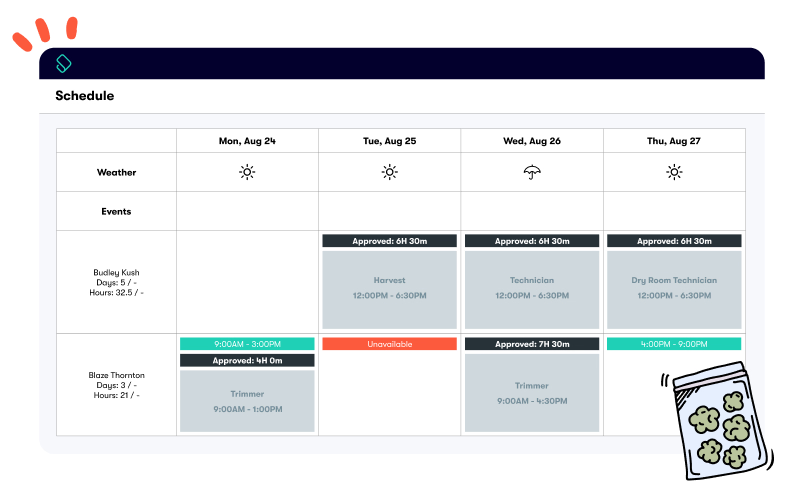
Scheduling and time tracking built for cultivation operations handle the shifting dates and the labor-hour detail together, which matters when the crew size quadruples and then drops back.
Plan the Wind-Down Before It Starts
Harvest labor demand recedes as quickly as it arrives, and the operators who handle the end well are the ones who decided how it ends before it began.
Put the end date in writing at the point of hire so nobody is surprised. Run final pay correctly and on time — seasonal workers talk, and your reputation with traveling crews is the asset you're building for next October. And before the last person leaves, mark who you'd take back. A returning trimmer who already knows your rooms, your standards, and your tracking system is worth more than three new hires next year.
Croptober Staffing FAQs
When Should Cultivators Start Hiring for Croptober?
Earlier is better, and June isn't too early to start lining up next season. For this year, late summer is still a workable window — experienced crews commit ahead, so the pool narrows as October approaches, but the roles that win at this stage are the ones with firm dates and guaranteed hours rather than the highest wage.
How Much Should I Budget for Harvest Labor?
Start from the current market rate for general trimming and adjust up for skill and location. National averages sit near $16 an hour, but experienced hands, tight local markets, and competition from larger operators all push that number higher.
Does Overtime Apply to Seasonal Harvest Workers?
It depends on your state. Agricultural overtime exemptions differ significantly and several states have phased theirs out. Confirm your obligations before you build the schedule, because harvest work generates overtime almost by definition.
How Do I Keep Compliance Intact With a Crew That Size?
Train tracking alongside the task, onboard in cohorts so nothing gets skipped, and keep time and inventory records in systems that talk to each other. Most harvest compliance issues come from rushed onboarding, not from bad intent.
Get Your Croptober Crew Ready
Croptober rewards the operators who treat it as a hiring and scheduling problem rather than a coverage problem — and there's still time to treat it that way this season. The crop sets the deadline. Everything else is preparation you get to control.
Ready to staff your harvest without pulling managers off the floor? KayaPush handles hiring, onboarding, scheduling, time tracking, and payroll for cultivation teams in one place, so a crew that quadruples for six weeks stays manageable. Book a demo with the KayaPush team today.